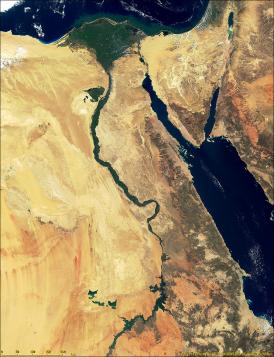
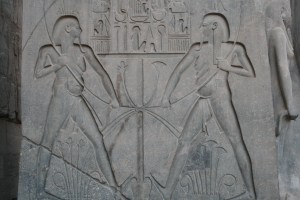
Egypt has always been at the mercy of the Nile. If the headwaters to the south in Ethiopia and East Africa experience drought than the floods which irrigate and replenish the soils fail and famine was the result. Since dynastic times temples along the river had gauges called Nilometers that allowed the priests to accurately gauge the height of the river and estimate the magnitude of the annual flooding. Word of the Nile’s height at the southern edges of the kingdom at Aswan could be quickly carried down river to Thebes and Memphis to inform Pharaoh. The Priests, and Pharaoh as the embodiment of the gods, were responsible for invoking divine intervention to stave off droughts. The god representing flood and fertility was called Hapi and offerings were made to curry his favor. However, the Egyptian pantheon also had a god of drought and desert – Seth – the slayer of Osiris and a far more powerful figure in Egyptian religion.

The Egyptian response to water resource challenges were not always passive. Evidence exists for canal building including the Scorpion Mace from the very dawn of the Protodynastic period which shows a ruler carving a canal. In more recent times flood barrages were built across channels of the Nile in the Delta to control water height there. Some incorporating castellated architecture of the British period. However, the most colossal of all the works along the Nile is the High Dam at Aswan. Completed with Soviet support in 1970 the High Dam stretches over 3 km across the Nile and holds the waters of Lake Nasser which extend south for 550 km to the Egyptian-Sudan border region. Aside from generating energy, the High Dam allows the storage of water from periods of high flow for release during dry times. The High Dam not only regulates the flow of the Nile, it is a form of insurance against the vagaries of climate and drought.
However, the benefits of the High Dam are not without costs. The creation of Lake Nasser inundated many Nubian villages along the former course of the Nile. The Nubians are an African rather than Semitic people and developed a vibrant and powerful civilization during the dynastic period that incorporated many elements of Egyptian architecture and religion. During the period of 745 to 650 BC the powerful Nubian Civilization, called Kush by the ancient Egyptians, expanded its reach to the very Delta of the Nile. During this, the 25th Dynasty, Nubian kings became the Pharaohs of Upper and Lower Egypt. During the 1960’s tens of thousands of Nubians were displaced by Lake Nasser. They have resettled along the Nile from Aswan to Luxor and beyond. Some follow traditional farming as can be seen in villages near Aswan while many of these kind and hospitable people have become workers in the tourist industry – particularly between Aswan and Luxor where hundreds of tourist boats of various sorts cruise the Nile taking visitors to the temples along the river.

The lack of flooding also impacts agriculture. Energy must be expended to drawn water from the river as it no longer floods freely, typically using gasoline and diesel pumps, to irrigate the fields. The soil-nourishing silts of the river floods have also declined.


 Occasionally we can catch glimpses of the ancient commoner’s Egypt through archaeology. Tomb paintings from Saqqara south of Cairo show day-to-day life in the Old Kingdom – some 4000 years ago. Men work in the field and at other tasks, women carry produce on their heads, scribes record transactions. Hundreds of figures provide a snapshot into the ancient past and lives of the common person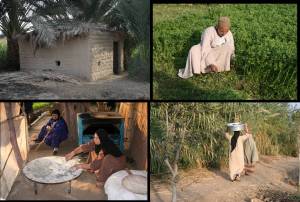

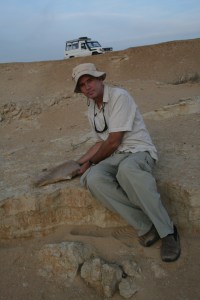
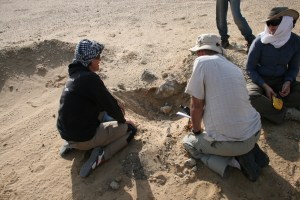 w the surface of the sand. In many areas one can find geologic deposits of lake sediment and marsh sediments that show us a much moister environment existed in the past. Indeed, at about 11,000 years ago this area of Egypt and the Sahara desert in general was much moister than today. Over time the climate became more arid, the wetlands and savanna vegetation disappeared, the sands became dry and mobile and the modern Sahara developed. The remains of the Neolithic agriculturalists and the lake and wetland deposits date back to this moister time. The ancient farmers lived along the lake shores and near wetlands and used those resources. Then natural climate change and increasing drought became too much and the people were forced to leave as the wetlands disappeared and the sands advanced.






 Glen Sproul dit MacDonald